Why Is Planning Your Day Still So Hard When Your Phone Knows Everything?
We’ve all been there—juggling errands, work, family time, and that tiny window to breathe—only to realize we’ve forgotten a dentist appointment or double-booked the kids’ activities. It feels like our calendars are working against us. But what if your phone could truly understand your life, not just list your tasks? Imagine an app that sees your world like you do—then quietly helps you move through it with less stress and more room for joy. That’s not science fiction. It’s the next step in how technology can support real life, especially for those of us balancing homes, families, and personal dreams.
The Daily Chaos: When Schedules Don’t Match Real Life
Let’s be honest—no one’s life runs like a perfectly color-coded calendar. You might plan your Tuesday down to the minute, but then the school calls, the dog needs an unexpected vet visit, or your partner forgets to take out the trash—again. Life doesn’t follow a grid, yet most planning tools treat it like it does. We’ve all stared at our phones, frustrated, asking, “Didn’t I set a reminder for this?” The truth is, our tools are too rigid. They list events, but they don’t understand them. They don’t know that your yoga class matters because it’s your only hour of peace, or that picking up your niece from dance means navigating rush hour with a car full of snacks and siblings.
And it’s not just about missing appointments. It’s the mental load that wears us down. That constant background hum of “What did I forget?” or “Who needs what and when?” It’s exhausting. We’re not just managing time—we’re managing emotions, relationships, and energy. Yet our calendars treat a grocery run the same as a doctor’s visit. No wonder we feel overwhelmed. The tools we rely on were built for efficiency, not for the messy, beautiful reality of daily life. They were designed for boardrooms, not breakfast chaos. But what if your phone could do more than remind you? What if it could anticipate?
This isn’t about doing more. It’s about doing what matters—without the stress. We don’t need more apps. We need smarter ones. Ones that see us not as data points, but as people. People with routines, quirks, and quiet hopes for a little more calm. The good news? Technology is finally catching up. And it’s not just about better notifications. It’s about seeing our lives in a whole new way—literally.
Enter Augmented Reality: Not Just for Games Anymore
When you hear “augmented reality,” you might think of those fun filters that turn you into a puppy or a mermaid. Or maybe you’ve tried an AR game where digital monsters appear in your backyard. But AR is so much more than entertainment. At its core, augmented reality is about blending digital information with the real world—adding helpful layers to what you already see. Think of it like a smart assistant that lives in your space, not just your screen. It’s not replacing reality. It’s enhancing it.
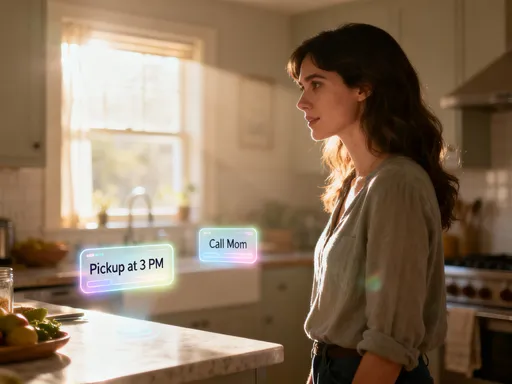
Here’s a simple way to understand it: imagine walking into your kitchen and seeing a gentle glow above the coffee maker that says, “You’re low on beans.” Or stepping into your closet and having your favorite outfit for today’s meeting highlight itself. That’s AR—not sci-fi, but practical, everyday support. It takes the digital noise from your phone and places it right where it makes sense in your physical world. No more scrolling. No more guessing. Just clear, timely info—exactly when and where you need it.
And the best part? You don’t need special glasses or a futuristic headset. Most of this already works on the smartphone in your pocket. The camera, GPS, and sensors in your phone are all the tools AR needs to start helping. It’s not about flashy tech. It’s about thoughtful design—technology that respects your time, your space, and your attention. For busy women managing homes and lives, this shift could be life-changing. Instead of pulling out your phone every five minutes, your phone starts working with your day, not against it.
How AR Brings Your Schedule to Life
Picture this: you’re making breakfast, and as you glance at the kitchen table, a soft, translucent card floats above it. It says, “School pickup at 3:15 PM. Traffic is light—leave by 3:00.” No alarm. No vibration. Just a calm, visual cue that blends into your morning. That’s AR scheduling. Instead of staring at a list on a screen, your day unfolds around you—calmly, clearly, and in context.
Imagine walking into your living room and seeing your to-do list projected on the wall, organized by time and priority. “Call insurance—10:30 AM” appears in a gentle blue box. “Buy birthday card” glows in yellow near the front door. These aren’t pop-ups or alerts. They’re part of your environment, like sticky notes that know when to show up and when to fade away. You don’t have to remember. You just see.
And it’s not just about reminders. AR can show you the flow of your day in a way that feels natural. During your morning walk, your phone’s camera might overlay your schedule on the sidewalk—“Lunch with Sarah at noon. Weather: sunny. Don’t forget her favorite flowers.” It’s like having a personal assistant who whispers just enough, never too much. The mental clutter fades. The day feels lighter. You’re not reacting to alerts. You’re moving through your life with confidence.
This isn’t about replacing your calendar. It’s about making it work for you. For moms, caregivers, or anyone juggling multiple roles, this kind of support can mean the difference between feeling scattered and feeling centered. You’re not just managing time—you’re reclaiming peace.
Smarter Planning Through Context Awareness
What makes AR truly powerful isn’t just that it shows you information—it’s that it knows when and where to show it. This is called context awareness. It means your phone learns your rhythms. It notices that you leave for work at 8:15 AM, that grocery shopping takes 45 minutes, and that your son’s soccer practice always runs 10 minutes late. Using simple, secure data—like location and time—it adapts your schedule in real time.
Here’s how it works in real life: you’re stuck in traffic, and your phone senses the delay. Instead of buzzing with a “Meeting in 5 minutes!” alert, it quietly adjusts. A calm voice says, “Your 2 PM call has been moved to 2:15. You’ll still make it.” No panic. No scrambling. The system is working with you, not against you. It’s like having a co-pilot who knows your life as well as you do.
Or imagine this: you’re at the pharmacy picking up a prescription, and your AR app reminds you to grab your daughter’s allergy medicine—because it knows you’re already in the store and that her refill is due. It’s not random. It’s thoughtful. It’s the kind of help that feels intuitive, not intrusive. And because it’s based on patterns you’ve already established, it doesn’t feel like Big Brother watching. It feels like a friend who remembers the things you don’t have bandwidth for.
This level of support is especially valuable for women who wear many hats. You’re not just managing your time—you’re managing your energy, your family’s needs, and your own well-being. When technology understands context, it stops being a tool and starts being a partner.
Making Family Coordination Effortless
If you’ve ever tried to coordinate a family schedule, you know the drill: endless texts, mismatched calendars, and the classic “Wait, whose turn is it to pick up the kids?” moment. Shared digital calendars help, but let’s be real—they’re still just lists. Easy to miss, easy to ignore. What if, instead, your family’s day was visible?
With AR, you could have a shared family wall—maybe in the kitchen or hallway—where each person’s schedule appears as a colorful, moving timeline. Mom’s work meeting glows in green. Dad’s gym time pulses in orange. The kids see fun icons: a soccer ball for practice, a book for homework, a music note for piano. A quick glance tells everyone what’s happening today—no questions, no nagging.
And it’s not just about visibility. It’s about connection. When your daughter sees her dentist appointment as a friendly cartoon tooth with a smile, she’s more likely to remember—and less likely to resist. When your partner sees a gentle reminder about dinner prep floating above the stove, it’s not a demand. It’s a nudge. The whole family stays in sync, not because someone’s micromanaging, but because the system supports everyone equally.
Plus, privacy is built in. You control what’s shared. You might show your commute time but keep your therapy appointment private. The kids see their activities, but not your work calls. It’s customizable, respectful, and designed for real families—not perfect ones. This isn’t about creating a military-style operation. It’s about reducing friction so you can focus on what really matters: being present with each other.
Small Moments, Big Peace of Mind
At the end of the day, the real benefit of AR scheduling isn’t just that you’ll be on time. It’s that you’ll feel lighter. Think about those tiny moments of stress: realizing you forgot to reply to the teacher’s email, or showing up to a meeting without your notes. Those little things add up. They chip away at your confidence and your calm.
But when your phone quietly handles the logistics, something shifts. You start to trust the system. You stop double-checking your calendar. You stop worrying. And in that space, something beautiful happens: you show up. You’re present at dinner because you’re not mentally scrolling through tomorrow’s to-do list. You’re patient with your kids because you’re not stressed about being late. You take that extra five minutes to sip your tea and breathe—because you know you have time.
That’s the emotional win. It’s not about doing more. It’s about being more. More present. More peaceful. More like yourself. For women who often put everyone else first, this kind of support isn’t a luxury. It’s a necessity. It’s how you protect your energy, honor your goals, and still show up for the people you love. Technology shouldn’t drain you. It should give you back to yourself.
Getting Started: Simple Steps to Try AR Planning Today
You might be thinking, “This sounds amazing, but do I need a new phone? Special glasses? A tech degree?” The answer is no. Many AR features are already available on current smartphones. You don’t need to be an expert. You just need to start small.
First, look for apps that combine calendar functions with AR. Some popular productivity apps are beginning to add visual scheduling features—like 3D timelines or location-based reminders. Search your app store for “AR planner” or “visual calendar” and read reviews from users like you. Look for ones that are simple, intuitive, and respect your privacy.
Next, set up your first visual schedule. Try it for one day—maybe a weekend day when you’re at home. Point your phone at your kitchen table and let the app project your to-dos. See how it feels. Does it help? Is it distracting? Adjust the settings. Turn off notifications you don’t need. Customize the colors, icons, and timing until it feels right.
Then, integrate it into your routine. Start with one part of your day—morning prep, school pickup, or evening wind-down. Let the app learn your patterns. Give it time. And don’t expect perfection. This is about progress, not control.
Finally, talk to your family. Show them how it works. Let the kids pick their own icons. Make it a shared experiment, not a top-down rule. When everyone feels included, the system works better for everyone.
Remember, this isn’t about adding more to your plate. It’s about making what’s already there easier to manage. You don’t have to do it all at once. Just take one step. Try one feature. See how it feels. Because the goal isn’t a perfect schedule. It’s a calmer mind, a lighter heart, and more room for the things that truly matter—like laughter, connection, and quiet moments of joy.