What If Your Wall Could Help You Finish Work Faster—Without the Stress?
How many times have you lost focus while working from home, searching for a switch, adjusting the lights, or fumbling with devices? You’re not alone. The noise, the distractions, the constant need to do things manually—it all slows you down. But what if your environment could keep up with your workflow? Not with complicated gadgets, but with simple, intuitive control built right into your walls? Imagine finishing tasks faster, feeling calmer, and actually enjoying your home office. It’s not magic—it’s thoughtful technology designed for real life, and it’s already changing how women like us work, breathe, and thrive at home.
The Hidden Cost of Small Distractions at Home
Let’s be honest—working from home should feel like freedom, but sometimes it feels more like chaos. You’re deep into an email, finally in the groove, when the room gets too dark. You pause, stand up, walk across the room, and fumble for the light switch. By the time you sit back down, your thought is gone. Or worse, you’re on a video call, and someone says, “You’re hard to see,” so you scramble to adjust the lamp while trying to keep smiling. These moments seem small, but they’re not. Each one pulls you out of focus, and each time, it takes an average of 23 minutes to fully return to deep concentration, according to research on task-switching. That’s not just inefficient—it’s exhausting.
And it’s not just the lights. It’s the thermostat that’s too cold, the fan that’s too loud, the playlist that doesn’t match your mood. Every time you get up to fix something, you break your rhythm. You’re not just losing time—you’re losing mental energy. Think about how often you’ve said, “I just need five quiet minutes,” only to be interrupted by your own environment. That frustration? It builds. It turns a productive day into a stressful one. The truth is, our homes weren’t designed for the way we work now. We’re using living rooms, bedrooms, even closets as offices, but the infrastructure hasn’t caught up. We’re still using 1950s-style switches in a 2025 world.
But here’s the good news: it doesn’t have to be this way. The problem isn’t you. It’s your setup. And the solution isn’t more discipline—it’s smarter design. When your space supports you instead of fighting you, everything changes. You don’t have to choose between comfort and productivity. You can have both. And it starts with something as simple as your wall.
From Cluttered Walls to Calm Control
Take a look at your walls. Chances are, they’re covered with switches—some for lights, some for fans, maybe a dimmer that never works right. There’s a remote for the soundbar, another for the blinds, and don’t even get me started on the smart speaker you have to talk to like it’s a moody teenager. It’s not just messy—it’s mentally draining. Every device has its own language, its own rules. You’re not living in a home; you’re managing a tech support desk.
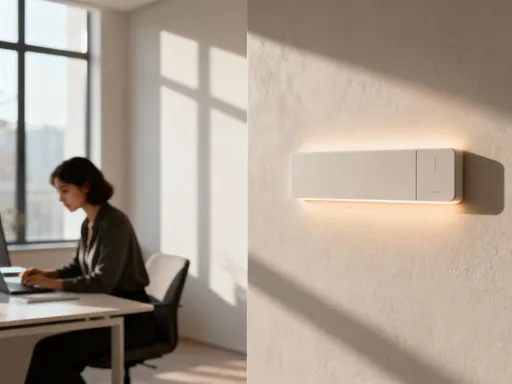
Now imagine walking into your home office and seeing one sleek panel on the wall—smooth, quiet, unobtrusive. No wires, no blinking lights, no clutter. With one touch, the lights brighten to a warm, focus-friendly glow. The fan turns on at just the right speed. Your favorite instrumental playlist starts softly in the background. This isn’t science fiction. It’s what smart wall controls offer: a single point of command for your entire environment. No more hunting for remotes. No more shouting at devices. Just calm, intentional control.
And the best part? It’s not about having the fanciest gadgets. It’s about simplicity. These panels can be customized to your routine. Maybe one button says “Start Work,” and another says “School Time” for when the kids are home. You can label them in your own words, in a font you like, with colors that feel good to you. It’s not tech for tech’s sake—it’s tech that serves your life. I remember talking to a mom in Ohio who told me, “I used to have three remotes and a phone app just to get the lighting right. Now I touch one spot on the wall, and everything just… works. It feels like my house finally listens to me.”
How Smart Control Keeps You in the Zone
Deep work—those hours when you’re fully immersed in a task—is priceless. But it’s fragile. It takes time to get into that state, and the smallest interruption can shatter it. That’s why reducing friction is so important. Smart wall controls help you stay in the zone by minimizing the number of decisions you have to make. Instead of thinking, “Should I turn on the desk lamp? Is the room too cold? Should I play music?” you can preset your ideal environment and activate it with one tap.
Think of it like a playlist for your space. You can create a “Focus” mode that sets the lighting to 4000K (a crisp, alert tone), lowers the blinds just enough to reduce glare, and plays soft acoustic music at a low volume. When you need to hop on a video call, you switch to “Meeting” mode—lights brighten slightly, the camera turns on, and your background noise is automatically reduced. After work, “Wind Down” dims the lights, warms the color temperature, and starts a calming playlist. These aren’t just conveniences—they’re rituals that signal to your brain, “It’s time to focus,” or “You can relax now.”
I spoke with a freelance writer in Austin who said her productivity doubled after installing a smart wall panel. “Before, I’d waste 10 minutes just getting set up. Now, I walk in, touch the panel, and I’m ready. It’s like my office greets me instead of ignoring me.” That’s the power of automation—not doing the work for you, but removing the barriers so you can do your best work. Fewer decisions mean less mental fatigue, which means you can stay sharp longer.
Designed for Real Life, Not Just Tech Lovers
Now, I know what you might be thinking: “This sounds great, but I’m not a tech person. I can barely set my coffee maker.” And that’s exactly who this is for. These systems aren’t built for engineers or gadget geeks. They’re built for people who want their homes to work—without the hassle. You don’t need to code anything. You don’t need to download 12 apps. Most smart wall panels are set up through a simple app, and once it’s done, you rarely have to touch it again.
The buttons are customizable. You can name them anything—“Read,” “Zoom,” “Homework Help,” “Date Night” (for when the kids are finally asleep). You can change the colors, adjust the brightness, even set timers. And if you live with others, everyone can have their own settings. Your teenager can have a “Gaming Mode,” and you can have a “Quiet Time” button that turns off all notifications in the house. It’s not about controlling everything—it’s about having control when you need it.
I talked to a retired teacher in Portland who was skeptical at first. “I thought it was for young people with fancy houses,” she said. “But then my daughter helped me set it up, and now I use it every day. I have a button for ‘Morning Tea’ that turns on the kitchen light, starts the kettle, and plays the news at low volume. It feels like a little gift to myself.” That’s the heart of it—technology that feels personal, not impersonal. It’s not about impressing anyone. It’s about making your day a little easier, a little kinder.
More Than Convenience—It’s About Well-Being
We often talk about productivity as if it’s just about getting more done. But real productivity is about feeling good while you’re doing it. If you’re stressed, tired, or uncomfortable, no amount of task lists will help. That’s why your environment matters so much. Lighting, temperature, sound—they all affect your mood, your energy, and your ability to think clearly.
For example, cool white light can help with alertness, but too much of it in the evening can disrupt your sleep. Warm light, on the other hand, helps your body relax. With smart controls, you can automatically shift the color temperature throughout the day—bright and crisp in the morning, softer and warmer as the sun goes down. This isn’t just nice—it’s science. Your body’s circadian rhythm responds to light, and when your home supports that natural cycle, you feel more balanced.
And it’s not just light. Noise levels matter too. A sudden loud sound—a barking dog, a slamming door—can spike your stress hormones. With smart systems, you can set ambient soundscapes—gentle rain, ocean waves, or white noise—that create a buffer between you and the outside world. One mom in Colorado told me, “I have a ‘Peace Mode’ button that turns off the ringer, dims the lights, and plays forest sounds. When I need a minute to breathe, I press it. It’s like a timeout for my nervous system.” That’s not just convenience. That’s care.
Simple Setup, Lasting Impact
Okay, let’s address the elephant in the room: “Isn’t this expensive? Do I need to tear open my walls?” Not at all. Many modern smart wall panels are designed for easy installation—no rewiring needed. They fit over your existing switch plate, connect to your Wi-Fi, and can be controlled through an app or voice assistant. Some even work with battery power, so renters can use them too. The setup usually takes a few hours, and most companies offer step-by-step video guides or even remote support.
You don’t have to do everything at once. Start with one room—your home office, your bedroom, your kitchen. Pick one routine you want to simplify. Maybe it’s your morning work setup or your evening wind-down. Create one scene, test it, and see how it feels. You might be surprised how much difference one button can make. And the cost? While prices vary, many systems are comparable to a high-end lamp or a weekend getaway. But unlike a vacation, this is an investment that pays off every single day.
I’ve heard from women who were worried about the learning curve, but after setup, they said it felt natural. “It’s like learning to use a new coffee maker,” one said. “A little awkward at first, but now I can’t imagine going back.” And the best part? Once it’s set up, it just works. You don’t have to think about it. It becomes part of your home, like your favorite chair or your go-to mug.
A Smarter Home That Works With You
The future of home offices isn’t about more screens, more devices, or more noise. It’s about harmony. It’s about a space that understands you, supports you, and helps you show up as your best self. When your walls can help you focus, calm down, or transition between roles—worker, parent, partner, friend—you don’t just work better. You live better.
Technology shouldn’t complicate your life. It should simplify it. It should give you back time, energy, and peace of mind. And sometimes, the most powerful tech isn’t the flashiest—it’s the quiet kind, the kind that blends into the background and makes everything else easier. A smart wall panel isn’t just a gadget. It’s a small act of self-care. It’s a way of saying, “My time matters. My focus matters. My calm matters.”
So next time you’re struggling to get into work mode, ask yourself: Is it me, or is it my environment? Because the truth is, you’re capable, you’re smart, and you’re doing your best. You just deserve a space that makes it easier. Maybe it’s time to stop working against your home—and start working with it. Your walls don’t have to be just walls. They can be your partner in a calmer, clearer, more joyful way of working. And honestly? You’ve earned that kind of support.