What If You Never Had to Worry About Missing a Ticket Again?
Have you ever frantically searched your bag for a printed ticket only to realize it’s been left at home? Or stood in line, phone battery dying, trying to pull up a digital pass? We’ve all been there. In a world where our lives are increasingly digital, why should something as simple as entering a train station or concert venue still cause stress? The quiet revolution of electronic ticket management is already making those moments obsolete—smarter, smoother, and seamlessly woven into our daily routines. It’s not flashy or loud, but it’s changing the way we move through our days, one tap at a time.
The Morning Rush That Used to Go Wrong
Imagine this: it’s 7:45 a.m., the school drop-off line is already forming, your youngest is still looking for her favorite hair clip, and your partner calls from the garage, “Did you print the train tickets?” Your stomach drops. You open your inbox, scroll past newsletters and grocery receipts, and there it is—buried under a promotional email for a sale you didn’t even know about. The confirmation for today’s 9:15 train. But the printer ran out of ink last night, and now you’re standing in your kitchen, heart racing, wondering if you can still make it to the station in time to buy a new one.
Sound familiar? For so many of us, this isn’t just a one-time panic—it’s a pattern. The physical ticket, once a symbol of preparedness, has become a source of quiet anxiety. It needs to be printed, stored, protected, and produced at just the right moment. And when life gets busy—and let’s be honest, whose life isn’t busy?—that little piece of paper becomes a ticking time bomb. I remember missing a family trip to the botanical gardens because we left the tickets on the kitchen counter. My daughter cried. I wanted to cry too. It wasn’t just about missing the event—it was about the feeling of failing, of not being on top of things, even when you’re doing your best.
And it’s not just trains or events. Concerts, doctor appointments with timed entry, museum visits during school breaks—so many parts of modern life require proof of access. But the systems we’ve relied on for decades were built for a slower world, one where we had time to plan, print, and prepare. Today, we need something that moves at the speed of life. That’s where the shift begins—not with a dramatic overhaul, but with a simple idea: what if the ticket followed you, instead of the other way around?
How Electronic Tickets Quietly Changed Everything
Think about the last time you boarded a flight. Did you print a boarding pass? Did you even pick one up at the kiosk? Chances are, you just pulled out your phone, opened an app, and showed a little QR code at security. No paper, no fuss. That small moment is part of a much bigger change. Electronic tickets aren’t new—they’ve been around for years—but what’s different now is how effortlessly they’ve woven themselves into our lives. They’ve gone from being a “nice-to-have” to an essential part of how we navigate the world.
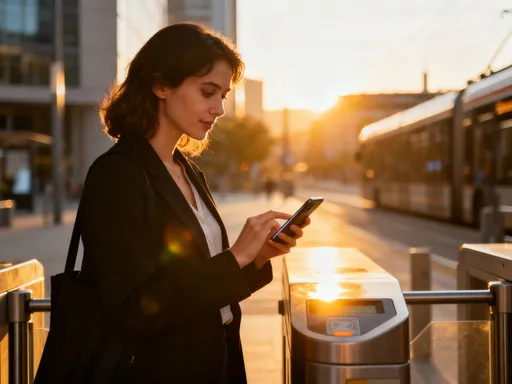
Take public transit, for example. In cities across the globe, riders now use mobile wallets to store transit passes. A quick tap of the phone at the turnstile, and you’re through. No more fumbling for change, no more worrying about expired cards. Even in smaller towns, local bus systems are adopting digital check-ins. And it’s not just about transportation. Movie theaters let you book and scan from your phone. Theme parks send digital entry passes straight to your email or app. Even your local yoga studio might use a booking system that checks you in automatically when you arrive.
What makes this shift so powerful is its invisibility. The best technology doesn’t demand your attention—it simply works. You don’t need to understand the backend, the encryption, or the cloud storage. You just need to know that when you open your phone, your ticket will be there. It’s like having a silent helper in your pocket, one that remembers what you need before you even think to look. And because these systems are connected, they can update in real time. If your train is delayed, your ticket adjusts. If the event time changes, you get a notification. No more calling customer service, no more confusion. The system adapts—so you don’t have to.
One Phone, Zero Stress: The New Normal
Let me tell you what changed for me: I stopped printing. Completely. Now, whether it’s a weekend getaway, a doctor’s appointment, or my son’s soccer tournament across town, I know everything I need is in my phone. And not just stored—I mean accessible, organized, and ready. I used to have a folder in my email labeled “Tickets & Reservations,” and it was a mess. Now, I use a single app that pulls all my bookings into one place. Flight confirmations, concert dates, even my library event sign-ups—they’re all in one view, sorted by date, with reminders built in.
But the real magic isn’t just convenience—it’s control. Last month, my daughter got sick the morning of our museum trip. I opened the app, rescheduled our tickets for next week, and got an instant confirmation. No calls, no fees, no stress. And because the system allows shared access, I was able to send the updated tickets to my sister, who ended up taking the kids instead. That kind of flexibility used to be impossible. Now, it’s normal.
For families, this is a game-changer. Think about how many hands tickets pass through in a single week. Kids forget things. Partners are busy. Relatives help out. With digital access, you can share tickets securely with a tap. No need to forward emails, no risk of someone deleting the wrong message. And if your phone dies? Many apps now offer offline access—your tickets are saved locally, so even without a signal, you’re covered. It’s not just about not missing the train. It’s about not missing the moment.
Beyond Convenience: How Digital Access Builds Trust
We don’t always notice trust until it’s broken. But when technology works the way it’s supposed to—consistently, quietly, without drama—we start to rely on it. And that’s exactly what’s happening with digital ticketing. It’s not just easier; it’s becoming something we trust with the small but important parts of our lives. We trust it to hold our plans. We trust it to update us. We trust it to be there when we need it.
One of the biggest improvements has been in reliability. Early digital tickets often required constant internet access, and if your phone lost signal, you were stuck. But now, most systems use cached data or dynamic QR codes that refresh automatically. Even if you’re underground in a subway station, your ticket still scans. And security has improved too. Instead of a simple barcode that can be copied, today’s tickets use encrypted tokens that change with each use. That means no one can take a screenshot and use your ticket. It’s yours, and only yours.
Reminders are another small but powerful feature. I used to miss appointments because I forgot to check my calendar. Now, apps send gentle nudges—“Your train leaves in two hours,” or “Don’t forget your tickets for tonight’s show.” These aren’t pushy notifications; they’re thoughtful prompts that feel like they’re on your side. And when a system anticipates your needs, it doesn’t just save time—it builds confidence. You start to feel like the world is just a little more organized, a little more manageable. And that peace of mind? It’s priceless.
Teaching Mom to Tap: Bridging Generations
I’ll be honest—I didn’t think my mom would ever use digital tickets. She still keeps a paper planner and prefers to write checks. When I first showed her how to access her concert ticket on her phone, she looked at me like I was speaking another language. “So I just… open this app? And it’s just… there?” I nodded. “What if the battery dies? What if I can’t find it? What if the screen breaks?” Her questions weren’t resistance—they were caution. And honestly, they were fair.
So we practiced. I walked her through it step by step. We added her tickets to her phone’s wallet, the same place she stores her library card. I showed her how the QR code appears automatically, how it refreshes if needed, and how she can screenshot it as a backup (even though it’s not necessary, it made her feel safer). And on the day of the concert, I called her an hour before. “Open your wallet,” I said. “Look at the bottom of the screen.” And there it was—her ticket, clear and ready. She sent me a photo, grinning. “I did it,” she said. “I really did it.”
That moment meant more than just tech adoption. It meant inclusion. Good technology shouldn’t only serve the young or the tech-savvy. It should be designed for everyone—grandparents, busy parents, anyone who just wants to get where they’re going without hassle. And today’s systems are finally getting that right. The interfaces are simpler. The steps are fewer. The language is clearer. You don’t need to be a digital native to use them. You just need to be willing to try. And when someone like my mom succeeds, it’s not just a personal win—it’s proof that the system is working the way it should.
The Hidden Gift: Time and Attention for What Matters
Here’s something I didn’t expect: when I stopped worrying about tickets, I started noticing more of my life. I used to spend those extra minutes in line double-checking my phone, making sure the ticket was still there. Now, I use that time to talk to my kids. To take a deep breath. To enjoy a quiet moment before the day really begins. It sounds small, but those moments add up. They’re not just about efficiency—they’re about presence.
Mental space is a limited resource, and every little stress takes a piece of it. The search for the ticket, the fear of missing out, the guilt of forgetting—it all drains us in ways we don’t always notice. But when those tiny burdens disappear, something shifts. We have more energy for the people we love. We’re less reactive. We’re more patient. I’ve found myself laughing more in the car on the way to school, asking my daughter about her dreams instead of stressing about being late. That’s the real gift of digital simplicity: it doesn’t just save time. It gives us back our attention.
And attention is love. When we’re not distracted by logistics, we can be fully in the moment. We can watch our children’s faces light up at the zoo. We can really listen when our partner shares a story. We can enjoy the quiet joy of a solo coffee before the world wakes up. Technology, at its best, doesn’t pull us away from life—it brings us closer to it. It clears the clutter so we can focus on what matters most. And for someone like me, who’s always trying to balance a hundred things at once, that’s not just helpful. It’s healing.
Where We’re Headed: A World Without Ticket Anxiety
So what’s next? I think about my daughter, who’s grown up in a world where tickets live on phones. To her, the idea of printing one seems strange, even a little old-fashioned. And maybe that’s how it should be. Just like we don’t mail letters to confirm dinner plans, one day we’ll look back and wonder why we ever stressed about a piece of paper.
The future of access isn’t just digital—it’s intuitive. Imagine a world where your ticket knows your schedule, adjusts to delays, and guides you through the station with gentle prompts. Where your family’s passes are shared seamlessly, updated automatically, and protected securely. Where entering a venue feels as natural as walking through your front door. That world isn’t science fiction. It’s already here, in pieces, and it’s growing every day.
But more than that, this shift is about more than technology. It’s about care. It’s about designing systems that understand real life—that respect our time, our energy, and our emotions. It’s about creating a world where we can move through our days with a little more ease, a little more joy, and a lot less fear of forgetting. Because at the end of the day, none of us want to be the person frantically digging through their bag. We want to be present. We want to connect. We want to live.
And if a simple digital ticket can help us do that—well, that’s not just progress. That’s peace.