Tired of Worrying Your Private Study Data Might Leak? How I Finally Learned in Peace
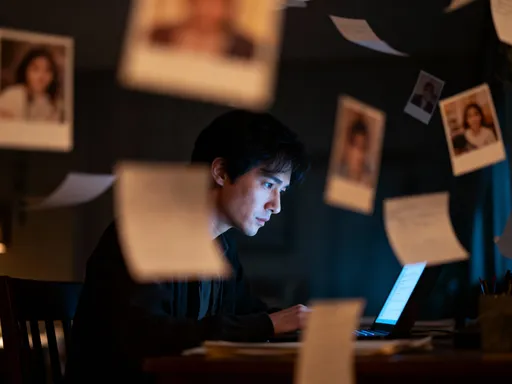
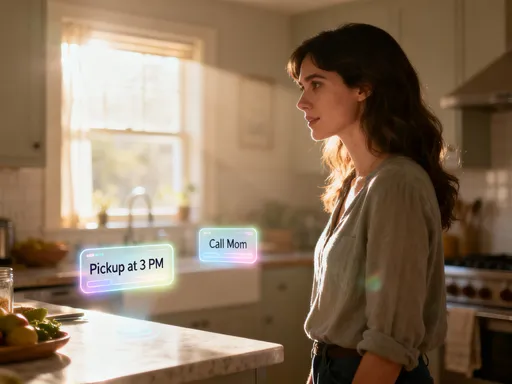
We’ve all been there—hunched over a laptop late at night, sipping cold coffee, trying to finish an online course while the Wi-Fi stutters and the kids shout in the background. You just want to grow, learn something new, become a better version of yourself. But what if every click, every quiz result, even the videos you pause and replay, is being tracked or stored where it shouldn’t be? I felt that knot in my stomach too—until I discovered how some platforms quietly protect your data like a trusted friend guarding your diary.
The Moment I Realized My Online Learning Wasn’t as Private as I Thought
It was 11:30 p.m., and I was deep into a course on stress management—something I’d signed up for after months of feeling overwhelmed. The house was finally quiet. My youngest was asleep, the dishes were done, and for the first time in days, I had space to breathe and learn. I paused a video about emotional resilience, jotted down a note about setting boundaries, and closed the tab. A few minutes later, while scrolling through social media to unwind, an ad popped up: 'Struggling with anxiety? Try our confidential coaching program.' My heart sank. I hadn’t searched for anxiety help. I hadn’t mentioned it anywhere. So how did they know?
That moment chilled me. It wasn’t just about an annoying ad. It was the realization that my private journey—my desire to grow, to heal, to become stronger—was being monitored. I wasn’t just learning; I was being watched. And not by a teacher or mentor, but by algorithms hungry for data. I started asking questions: Who has access to my course history? Are my quiz results stored on some server I’ll never see? Could my employer, if I’m taking a work-related course, find out how many times I failed a test? The more I dug, the more uneasy I felt. Learning should feel safe. It should feel like a sanctuary, not a surveillance zone.
What made it worse was the emotional weight of it all. I wasn’t just studying for a certificate—I was working on myself. Maybe you’re learning to code to switch careers, or taking a nutrition course because you want to feed your family better, or studying mindfulness because motherhood has left you drained. These aren’t just topics. They’re personal. They’re tied to our hopes, our insecurities, our quiet dreams. When that space feels violated, it doesn’t just scare us—it silences us. I almost quit the course. But instead, I decided to find out: Is there a way to learn online without giving up my privacy?
What We Assume About Online Learning Platforms—And Where We’re Wrong
Most of us assume that online learning is harmless. 'It’s just a course,' we tell ourselves. 'No one cares what I’m watching.' And on the surface, that feels true. But behind the scenes, many platforms collect far more than we realize. Every time you log in, your device sends information: your IP address, your location, your browser type. As you study, the platform tracks how long you spend on each page, which videos you replay, where you pause, how you answer quiz questions—even how many times you get them wrong. Some platforms share this data with third-party advertisers, analytics companies, or cloud storage providers, often buried in terms we don’t read.
I used to think, 'I’m not doing anything illegal. Why should I care?' But privacy isn’t about hiding something wrong. It’s about protecting something valuable—your personal growth. Imagine keeping a journal where every page is copied and sent to a stranger. That’s what some platforms do with your learning data. And it’s not always out of malice. Sometimes, it’s just how the system was built—prioritizing engagement, personalization, or profit over protection. I remember reading a course privacy policy that said, 'We may share anonymized user data with partners to improve service delivery.' But 'anonymized' doesn’t always mean safe. Studies have shown that with enough data points—like your login times, course choices, and quiz patterns—it’s possible to re-identify you, even without your name.
The real danger isn’t one big data breach. It’s the slow, quiet collection of your digital footprints, piece by piece, until someone knows more about your struggles and goals than you’d ever want. And for women in our 30s, 40s, and 50s—who are often balancing careers, family, and self-improvement—this feels especially personal. We’re not just learners. We’re caregivers, decision-makers, quiet changemakers. When our learning feels exposed, it doesn’t just invade our privacy—it undermines our confidence. But the good news? Not all platforms work this way. Some are designed with privacy at the core. And once I found them, everything changed.
The Hidden Feature That Changed Everything: Local Data Processing
The first time I heard about local data processing, I’ll admit—I didn’t get it. It sounded like tech jargon, something for engineers, not moms trying to finish a course before bedtime. But then I heard it explained simply: 'It means your data stays on your device, like notes in a notebook that never leaves your bag.' That clicked. I thought about my daughter’s schoolwork—she keeps her journal in her backpack, and no one else sees it unless she chooses to share. Why shouldn’t my learning be the same?
Some platforms now use local data processing to keep your activity private. When you watch a video, take a quiz, or save a note, that information is stored on your phone or laptop, not sent to a distant server. Only when you choose to sync—say, to continue on another device—does any data move, and even then, it’s encrypted. I tried one of these platforms during a course on financial literacy. I was learning about budgeting because I wanted to save for my son’s college fund, but I didn’t want my spouse or anyone else to see my progress or mistakes. With local processing, I could study freely. No data was uploaded in real time. No third party could track my hesitation on questions about debt. It felt like having a private tutor who never takes notes anyone else can read.
The emotional shift was real. I stopped second-guessing myself. I could pause, rewind, and repeat a lesson on compound interest three times without feeling silly. I could leave notes like 'This part scares me—need to talk to a real advisor' without worrying they’d be flagged or analyzed. That sense of safety made me more honest with myself, which made me learn faster. It wasn’t just about privacy—it was about dignity. I wasn’t a data point. I was a person, growing at my own pace, in my own space. And that made all the difference.
End-to-End Encryption in Learning? Yes, It’s Possible
I’ll be honest—I used to think encryption was only for texting. Apps like WhatsApp and Signal use it to keep messages private, so only the sender and receiver can read them. But I never imagined it could apply to learning. Then I found a platform that uses end-to-end encryption for course progress, notes, and test results. At first, I didn’t believe it. 'How can a learning app be encrypted?' I asked. But the support team walked me through it: when I save a note or complete a quiz, the data is scrambled on my device. It stays scrambled as it travels to the server. Only my device has the key to unscramble it. Even the platform’s own staff can’t read my content.
That felt like magic. It was like writing in a journal and locking it with a key only I had. No admin, no algorithm, no advertiser could peek inside. I remember studying a module on personal boundaries—one of the hardest topics for me—and writing down things I’d never say out loud. With encryption, I knew those words were safe. I didn’t have to self-censor. I didn’t have to worry about a future employer seeing that I struggled with saying no. My learning was mine.
What surprised me most was how much this boosted my confidence. When I knew my data was truly private, I took more risks. I attempted harder quizzes. I asked questions in forums I would’ve skipped before. I even shared some of my encrypted notes with my sister, who was going through something similar—we both had the key, so we could learn together, safely. That’s the power of real privacy: it doesn’t just protect you—it empowers you. It turns learning from a performance into a process. And for women who’ve spent years putting others first, that space to grow without judgment is priceless.
Offline Mode: More Than Just Convenience
I’ll admit, I used to think of offline mode as just a travel hack. Download a course, watch it on a flight, no Wi-Fi needed. Cute, but not life-changing. Then I tried it during a train ride to visit my mom. I opened a lesson on mindful parenting—something I desperately needed after a week of yelling over homework. As I watched, it hit me: none of this was being uploaded. No one knew what I was studying. No server was logging my progress. My learning was happening in real time, but my data wasn’t being broadcast.
That feeling was liberating. I could pause the video after a tough section and just sit with my thoughts. I could replay the part about deep breathing without worrying it would show up in a report. And when I got home, I chose whether to sync my progress. I didn’t have to. I could keep it all offline, private, just for me. Offline mode isn’t just about access—it’s about control. It means you decide when, where, and with whom your learning is shared. For busy women, that’s huge. Maybe you’re studying during nap time, or late at night, or in a crowded waiting room. Offline mode lets you learn in peace, without the pressure of being tracked.
I started using it for sensitive topics—career changes, health goals, personal development. I’d download a course, study in chunks, and only sync when I was ready. Sometimes, I never synced at all. And that was okay. My progress wasn’t lost. It was protected. It reminded me that learning isn’t just about finishing a course. It’s about the quiet moments of reflection, the 'aha' insights, the personal breakthroughs that don’t need a certificate to matter. Offline mode gave me back those moments—untouched by algorithms, unclaimed by advertisers, truly mine.
Transparent Privacy Dashboards: Seeing Is Believing
One of the most empowering tools I’ve found is the privacy dashboard. It’s a simple page, usually under 'Settings,' that shows exactly what data the platform collects, where it’s stored, and who can access it. No legalese. No fine print. Just clear, visual icons—like a lock for encrypted data, a cloud for stored files, a person for shared content. I remember the first time I saw mine. I clicked on it, and there it was: 'Your notes: encrypted. Your quiz history: stored locally. Your progress: not shared with third parties.' I exhaled. For once, I wasn’t guessing. I could see it.
Even better, I could control it. A toggle let me choose whether to share my completion certificate with my employer. Another let me delete my activity history with one click. I could turn off data sharing with analytics partners—something I didn’t even know was on by default. That level of transparency made me feel respected. It was like the platform was saying, 'We see you. We trust you. Your privacy matters.' And that trust made me more likely to keep using it, to dive deeper into courses, to be honest in my learning.
For women who’ve spent years managing households, budgets, and family schedules, this kind of control feels familiar—and deeply satisfying. We’re used to making decisions that protect our families. Now, we can protect ourselves too. A good privacy dashboard doesn’t just inform—it empowers. It turns fear into agency. It reminds us that we don’t have to give up our privacy to grow. We can have both.
Building Trust: Why Data Protection Helps You Learn Better
Here’s what I didn’t expect: when I stopped worrying about who might see my learning, I started learning more. I wasn’t just absorbing information—I was changing. I took bolder steps. I asked harder questions. I failed more often, because I wasn’t afraid of the record. That’s the secret no one talks about: emotional safety fuels intellectual growth. You can’t explore, experiment, or evolve if you’re constantly looking over your shoulder.
True learning happens in the messy middle—in the retries, the doubts, the slow progress. And that space needs to be protected. The best learning platforms aren’t just about content or convenience. They’re about creating a safe container for growth. They understand that when you feel secure, you take risks. When you feel trusted, you open up. When you know your journey is private, you’re more likely to stay on it.
For women in midlife, this is especially powerful. We’re not just learning new skills—we’re redefining ourselves. Maybe you’re going back to school, starting a business, or healing from burnout. These aren’t small things. They require courage. And courage needs cover. It needs a space where you can be imperfect, where you can grow without an audience. That’s what privacy gives us—not just protection, but permission. Permission to be curious. To fail. To try again. To become.
So if you’ve ever hesitated to start a course because you’re not ready to be seen, I get it. But know this: there are platforms that protect your journey like a trusted friend. They use local processing, encryption, offline mode, and clear dashboards to keep your data safe. They don’t treat you as a product. They treat you as a person. And when your learning feels private, it doesn’t just stay safe—it flourishes. You flourish. And that’s the most beautiful outcome of all.