Uncorking Wealth Without the Risk: My Real Talk on Smarter Wine Investing
Ever wondered if that vintage Bordeaux in your cellar could be a golden ticket? I did too—until I learned the hard way that wine investing isn’t just about taste, it’s about risk control. Unlike stocks or real estate, rare bottles don’t come with price alerts or insurance. One wrong storage call, one fake label, and boom—your “asset” is toast. I once bought a 1982 Lafite Rothschild at auction, convinced it would double in ten years. Five years later, I discovered the provenance trail had gaps. Resale value? Less than half. That loss wasn’t just financial—it was a wake-up call. Wine investing, when done blindly, is less a strategy and more a gamble. But when approached with discipline, it can become a meaningful, resilient part of a diversified portfolio. The key isn’t chasing headlines—it’s building systems that protect your capital while letting value grow quietly over time. This is not a story of fast riches. It’s a guide to doing wine investing right—without the heartbreak.
The Allure and Illusion of Wine as an Investment
Wine has long carried an aura of sophistication, wealth, and exclusivity. Walk into any high-end auction house, and you’ll see bidders vying for a 1945 Mouton Rothschild or a magnum of Romanée-Conti, their prices soaring into six figures. These moments feed a powerful narrative: that fine wine is not just a luxury, but a high-performing asset class. Media headlines amplify this, touting double-digit annual returns and stories of collectors who turned cellars into fortunes. For many, the appeal lies not just in potential profits, but in the romance of ownership—a bottle that ages like wisdom, a tangible piece of history you can taste. Yet beneath this polished surface lies a market far less predictable than it appears.
The reality is that wine does not behave like traditional investments. There are no quarterly earnings reports, no dividend payouts, and no central exchange setting transparent prices. Instead, value hinges on a fragile mix of provenance, condition, rarity, and shifting consumer tastes. A bottle that fetches $5,000 today might struggle to sell for $2,000 in five years if demand wanes or doubts about authenticity arise. Unlike stocks, which can be sold instantly with a click, wine is illiquid. Finding a buyer at the right price often takes months, even for top-tier vintages. And unlike real estate, which can generate rental income, wine produces nothing until sold—making it a pure speculative holding.
Moreover, the market is opaque. Prices vary widely between auction houses, private dealers, and online platforms, with little standardization. A 1990 Pétrus might sell for $8,000 in London and $7,200 in Hong Kong on the same day, with no clear explanation for the gap. This lack of transparency increases the risk of overpaying or underpricing. Add to that the influence of trends—such as the recent surge in demand for Italian Barolos or Burgundy’s cult wines—and you have a market that can shift dramatically based on fashion, not fundamentals. The danger for investors is mistaking short-term hype for long-term value. Many enter the space assuming rarity equals appreciation, only to discover that rarity without demand equals stagnation—or worse, depreciation.
Why Risk Control Matters More Than Returns in Wine Investing
In most investment conversations, the spotlight is on returns: what can you earn, and how fast? But in wine, this focus is dangerously misplaced. Because wine is both physical and perishable, the priority must shift from maximizing gains to minimizing losses. A 20% return means nothing if a storage failure ruins the bottle or a counterfeit claim invalidates its value overnight. The truth is, preserving capital is harder in wine than in nearly any other asset class—and far more critical. A single misstep can erase years of appreciation in an instant.
Consider the case of a collector in California who stored a prized collection in his garage, assuming the dry climate was sufficient. After five years, he discovered mold damage and oxidation in over 40% of his bottles. The estimated loss exceeded $150,000. No insurance covered it—because he hadn’t documented storage conditions or declared the collection as an asset. This wasn’t market risk; it was preventable operational failure. Contrast that with another investor who kept a smaller portfolio in a climate-controlled vault, with full provenance records and periodic condition checks. Over the same period, her returns were modest—around 5% annually—but every bottle remained intact, and she could liquidate at will. Her strategy wasn’t about beating the market; it was about surviving it.
Wine’s lack of liquidity amplifies the need for risk control. When stock markets dip, investors can wait, sell partially, or rebalance. With wine, selling under pressure often means accepting steep discounts. Auction houses charge buyer’s premiums up to 25%, and private sales require trust and verification, both of which take time. If an emergency arises and cash is needed quickly, a wine collection may not deliver. That’s why smart investors treat wine not as a primary wealth generator, but as a satellite holding—one that adds diversification and cultural value, but only if safeguarded rigorously. The question isn’t “Can this bottle triple in value?” but “What’s the worst that could happen, and am I prepared for it?”
The Hidden Dangers: Fraud, Storage, and Market Volatility
Wine investing faces three silent killers: fraud, environmental damage, and market unpredictability. Each operates in the shadows, often revealing itself only after the damage is done. Fraud, in particular, is rampant in the high-end market. A 2016 investigation by the FBI uncovered a ring that sold over $100 million in counterfeit wines, including fake bottles of 1811 Château d’Yquem and 1921 Heidsieck. Even experienced collectors and auction houses have been deceived. Labels can be expertly replicated, capsules re-corked, and provenance documents forged. The problem is compounded by the fact that authentication often requires invasive testing, which can devalue the bottle itself. Once a wine’s legitimacy is questioned, its marketability plummets, regardless of whether the doubt is justified.
Storage failures are equally destructive. Wine is a living product, sensitive to temperature, humidity, light, and vibration. Ideal conditions require a stable temperature of 55°F (13°C), humidity around 70%, darkness, and minimal movement. Deviations—even brief ones—can trigger chemical changes that degrade quality. A bottle exposed to 80°F for a week during summer shipping may develop “cooked” flavors, rendering it undrinkable and unsellable. Humidity below 50% causes corks to dry out, letting air in and accelerating oxidation. Light, especially UV, can create “light strike,” giving wine a wet cardboard taste. These risks are not theoretical. In 2018, a London collector lost an entire case of 1989 Dom Pérignon because his basement flooded, and the bottles were stored horizontally without waterproof protection. The liquid was intact, but the labels were ruined—enough to kill buyer confidence.
Market volatility adds another layer of uncertainty. Demand for certain regions or vintages can shift suddenly due to critics’ ratings, economic conditions, or geopolitical trends. When Robert Parker awarded a perfect 100-point score to the 2005 Pavie, prices jumped 300% within a year. But by 2015, skepticism grew about the wine’s longevity, and values dropped by over 60%. Similarly, Chinese demand once drove Burgundy prices to record highs, but after economic slowdowns and anti-corruption campaigns, the market cooled sharply. These swings are not driven by fundamentals like yield or revenue, but by sentiment and speculation. An investor who bought at the peak without understanding these dynamics could face a decade-long wait to break even. Without risk controls, wine becomes less an investment and more a hostage to forces beyond anyone’s control.
Building a Defense: Diversification Beyond Single Bottles
One of the most common mistakes in wine investing is overconcentration. Collectors often fixate on “trophy wines”—a single vintage from a legendary château—believing that rarity guarantees returns. But putting a large portion of capital into one bottle or producer is akin to owning only tech stocks in 2000 or real estate in 2008. When the market shifts, the lack of diversification magnifies losses. A smarter approach is to build a portfolio that spreads risk across regions, styles, and vintages, creating resilience without sacrificing upside.
Consider a balanced structure: 40% in established French classics like Bordeaux and Burgundy, 30% in high-potential Italian and Spanish wines, 20% in emerging regions such as Sonoma or Willamette Valley, and 10% in rare formats like magnums or half-bottles. This mix reduces dependence on any single market trend. For example, while Bordeaux prices may stagnate due to oversupply, a strong vintage in Barolo or Priorat could offset that with appreciation. Diversification also includes vintage spread. Instead of buying only 2010 Bordeaux, a prudent investor might allocate across 2009, 2010, and 2015, capturing different weather conditions and market cycles.
Producer selection matters too. While first-growth châteaux offer prestige, they come with premium prices and slower turnover. Including respected but less hyped producers—like Château Montrose or Domaine Dujac—can offer better value and growth potential. These names have strong track records but haven’t been inflated by speculative bidding. Additionally, blending reds with whites and Champagne introduces further balance. While reds dominate the investment market, top-tier white Burgundies like Montrachet have shown consistent long-term growth, and vintage Champagne often holds value well due to its aging potential and global demand.
The goal is not to eliminate risk—no portfolio can do that—but to manage it systematically. A diversified wine portfolio won’t double in three years, but it’s far less likely to lose half its value overnight. It becomes a tool for steady wealth preservation, enriched by the pleasure of ownership, rather than a gamble on a single bottle’s fate.
Provenance First: How to Verify Before You Buy
In wine investing, provenance is everything. It’s the documented history of a bottle’s ownership, storage, and handling—the paper trail that confirms authenticity and condition. Without it, even the most prestigious label is suspect. A bottle of 1947 Cheval Blanc might look perfect, but if it was stored in a damp basement for 20 years, its value is negligible. Likewise, if the seller can’t provide a clear chain of custody, the risk of fraud rises sharply. That’s why the first rule of buying investment-grade wine is simple: never skip due diligence.
Start with the source. Reputable auction houses like Sotheby’s, Christie’s, or Zachys maintain rigorous vetting processes, including pre-sale inspections and provenance verification. Private dealers should provide detailed documentation, including purchase receipts, storage logs, and previous ownership records. If any part of the history is missing or vague, treat it as a red flag. Avoid “too good to be true” deals—bottles priced significantly below market rate often have hidden flaws or questionable origins. One collector in Texas bought a case of 1961 Latour at 30% below market, only to learn later it had been part of a known counterfeit batch. The lesson? Discounted wine is rarely a bargain.
Third-party verification adds another layer of protection. Certified wine consultants or authentication services can inspect labels, capsules, and fill levels to detect tampering. Some platforms now use blockchain technology to create immutable records of ownership and storage conditions, offering digital provenance that’s harder to forge. While not yet universal, these tools are gaining traction among serious investors. Additionally, consider buying directly from wineries’ library collections when possible. Producers like Château Margaux or Domaine de la Romanée-Conti occasionally release older vintages with full documentation, offering the highest confidence in authenticity.
Finally, trust your instincts. If a seller hesitates to answer questions, avoids video inspections, or pressures you to buy quickly, walk away. Wine investing should be deliberate, not impulsive. The extra time spent verifying a bottle’s history may delay a purchase, but it prevents irreversible losses. In this market, patience isn’t just a virtue—it’s a risk control strategy.
The Smart Way to Store: Preserving Value Over Time
Buying the right wine is only half the battle. How you store it determines whether it appreciates or deteriorates. Unlike gold or stocks, wine is perishable. A bottle that costs $1,000 today could be worthless in a decade if stored improperly. That’s why storage isn’t a secondary concern—it’s a core component of investment strategy. The goal is not just to keep wine drinkable, but to maintain its market value, which depends on flawless condition.
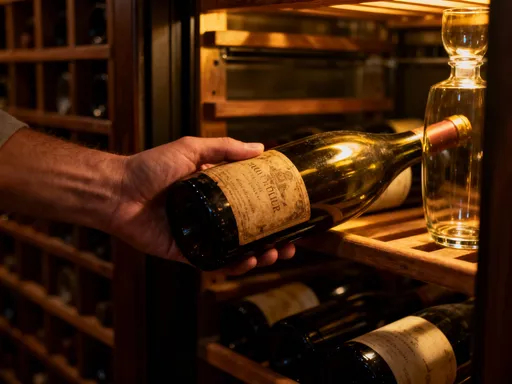
Professional wine vaults offer the gold standard. Facilities like those from Amano, Vinotheque, or Concierge Wine Storage provide climate-controlled environments with 24/7 monitoring, insurance, and secure access. They maintain precise temperature and humidity levels, protect against light and vibration, and often offer digital inventory tracking. For high-value collections, these services are worth the annual fee—typically $100 to $500 per case, depending on location and amenities. The peace of mind, and the preservation of value, far outweigh the cost.
For smaller collections, climate-controlled wine cabinets are a viable alternative. Look for models with dual-zone cooling, humidity regulation, and UV-resistant glass. Avoid placing them in kitchens or near heat sources, as temperature fluctuations are the enemy of aging wine. Store bottles horizontally to keep corks moist, and minimize movement. Even minor shaking can disturb sediment and accelerate aging. If you lack space or budget for professional storage, consider partnering with a trusted wine club or private cellar that offers shared vault services.
Insurance is another critical element. Standard homeowners’ policies often exclude wine or cap coverage at low amounts. A specialized wine insurance policy, available through providers like Chubb or ArgoGlobal, can cover losses from theft, flood, fire, or spoilage, with values based on current market prices. Be sure to document your collection with photos, receipts, and condition reports—this streamlines claims and proves value. Remember, a well-stored bottle isn’t just protected—it’s an asset that continues to grow in confidence as much as in value.
Knowing When to Sell: Exit Strategies That Protect Gains
Timing the sale of investment wine is as important as timing the purchase. Hold too long, and you risk missing the peak or facing unexpected market drops. Sell too early, and you leave gains on the table. The key is to treat selling as a planned, disciplined process—not a reaction to emotion or urgency. A solid exit strategy begins long before the first bottle is bought, with clear goals and market awareness.
Monitor market signals closely. Auction results from major houses provide real-time data on demand trends. If prices for a particular vintage or region are rising steadily, it may be a sign of growing interest. Conversely, declining bids or unsold lots suggest cooling demand. Producer changes—such as a new winemaker or shift in style—can also impact value. Economic indicators matter too; during recessions, luxury goods like fine wine often see reduced bidding. Staying informed through industry reports, collector forums, and wine indices helps identify optimal windows for selling.
Staggered selling reduces risk. Instead of liquidating an entire holding at once, sell portions over time. This averages out price fluctuations and avoids flooding the market, which can depress values. Another option is to work with a reputable wine broker who has access to private buyers and can negotiate discreetly. Wine funds, while less common, allow investors to sell shares in a pooled portfolio, offering liquidity without direct ownership transfer. These approaches provide flexibility and reduce the pressure to sell at the worst possible moment.
The ultimate goal is to lock in gains before downturns hit. That means having predefined exit criteria—such as a target return, a time horizon, or a market condition—and sticking to them. Emotion has no place in this decision. The collector who sells because they “need the money for a vacation” or “heard a rumor about a crash” is gambling, not investing. Discipline, documentation, and data—not hunches—should drive the sale. When done right, exiting a wine position isn’t an end, but a transition—freeing capital to reinvest wisely, with lessons learned and value preserved.
Conclusion: Investing in Wine, Not Hype
Wine can be a rewarding addition to a thoughtful investment strategy—but only if approached with realism, discipline, and a focus on risk control. The real opportunity isn’t in chasing headlines or owning the rarest bottle on the block. It’s in building a portfolio that withstands time, fraud, and market swings. Success in wine investing isn’t measured by how much you earn in a year, but by how much value you preserve over decades. It’s about avoiding the heartbreak of loss, not just celebrating the thrill of gain.
By prioritizing provenance, diversification, and proper storage, investors can enjoy the cultural richness of wine while treating it as a serious asset. This isn’t about getting rich quick. It’s about making informed choices today that still pay off in 20 or 30 years. Whether you’re starting with a single case or managing a cellar of hundreds, the principles remain the same: verify, protect, and plan. In a world full of financial noise, wine investing—done right—offers a rare blend of tradition, beauty, and quiet resilience. Uncork the potential, but leave the hype on the shelf.